Shanghai and Paris: A Century‑Long Abstract Symphony
By Xu Bocheng
Art makes the invisible visible. As the cradle of China’s modern‑contemporary abstract art, Shanghai preserves the full trajectory of its century‑long development, while Paris stands as the global centre of modern art, home to its most radical abstract movement. For over a hundred years, the two metropolises have maintained a profound artistic dialogue via brushwork, colour and diverse media.
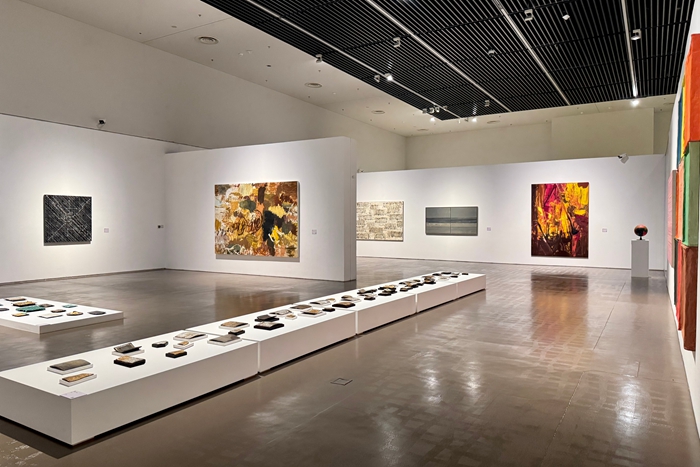
Marking its 70th anniversary, Shanghai Art Museum presents Side‑by‑Side: Abstract Art in Shanghai and Paris. This landmark exhibition delivers a visual feast of Eastern and Western abstract creation, exploring the inner logic behind this cross‑cultural artistic exchange.
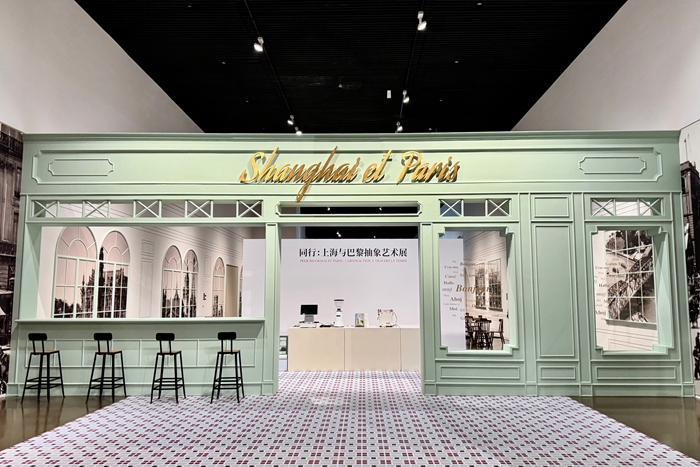
Visitors enter through an installation recreating a café, a shared cultural symbol of both cities. One view evokes the Seine, the other the Huangpu River skyline. This setup highlights how modern ideas and creative inspirations converged in these two urban spaces. Chief curator Shang Hui observes that this parallel journey was never one‑sided imitation. Rooted in distinct cultural heritages, both cities reimagined abstract art on their own terms. Paris drove the birth and global spread of abstract concepts. Drawing on traditional Chinese ink theories and the innovative spirit of the Shanghai School, early‑20th‑century Shanghai formed fertile ground to absorb and localise Western modernism. This century‑long dialogue records Chinese modern art’s pursuit of independent cultural discourse through mutual learning.
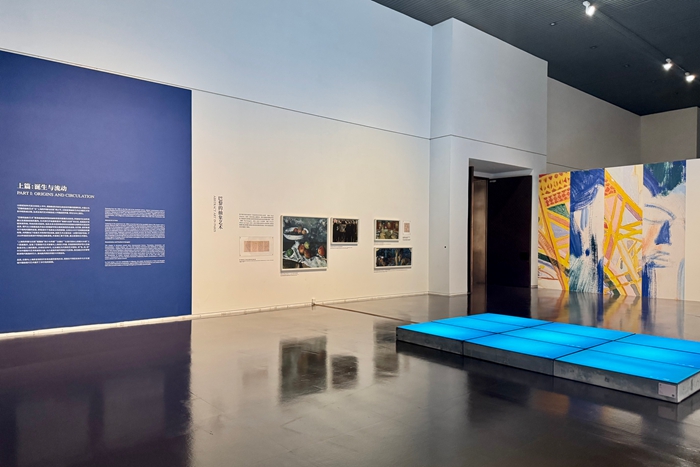
Rejecting linear art‑history narration, the exhibition organises its story into three chapters from a dual‑city perspective.
Birth and Circulation (1890‑1949) examines the origins of abstract thinking. In Paris, Cézanne, the Fauves and Cubists laid the foundation for abstract painting. In Shanghai, the Juelan Society championed modern expression through colour, line and form, while Lu Xun’s introduction of European prints nurtured early abstract awareness among local artists.
Exploration and Reinvention (1949‑1999) traces transformation and awakening. While realism dominated mainstream creation, Liu Haisu, Lin Fengmian and Wu Dayu kept exploring form and expressive free‑brush techniques in Shanghai. Zao Wou‑Ki and Chu Teh‑Chun achieved international acclaim in France, blending Chinese calligraphy and landscape spirit into post‑war lyrical abstraction. Back home, Wu Guanzhong triggered nationwide debates over formal and abstract beauty. Independent art events marked Shanghai’s abstract art growing from individual experiments into a collective movement.
Media and Experiment (2000‑Present) showcases today’s innovations. Paris‑based artists convey inner feelings through painting’s physical qualities, with subtle echoes of Eastern Zen. Shanghai artists break free from traditional canvases, merging Oriental calligraphic vitality with lacquer, tiles, industrial materials and installations to forge a culturally‑distinct Chinese abstract language.
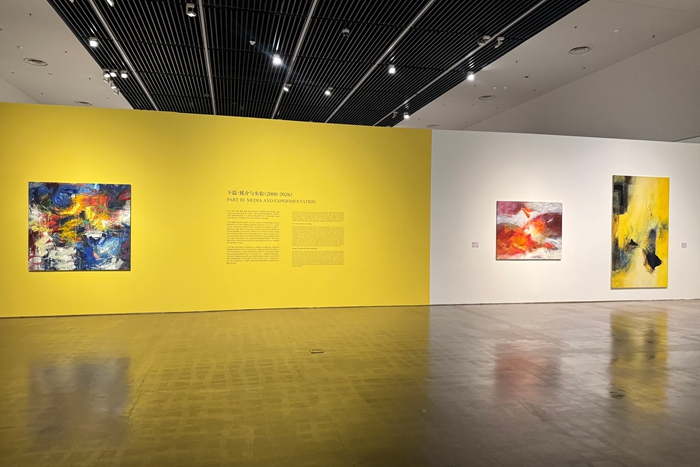
Instead of searching for recognisable subjects, visitors are encouraged to sense colour, brushstroke rhythm and material texture. A series of public educational programmes makes abstract art accessible to audiences of all ages.
As Hegel noted, art lives through spiritual expression. This century‑long practice proves that cross‑cultural exchange does not erase cultural uniqueness. When civilisations illuminate one another, they bloom with greater splendour.